
Language barriers are one of the most common challenges for international travelers and business professionals. In the modern era, two main solutions have emerged: software-based smartphone applications and dedicated hardware. Deciding between a translator device and a mobile app involves evaluating accuracy, reliability, and specific environmental factors. This guide examines the technical differences, practical use cases, and long-term costs of both options to help you choose the most effective tool for your communication needs.

What Is the Difference Between a Translation App and a Translator Device?
A translation app is a software package designed to run on a multi-purpose smartphone, sharing system resources with other apps. In contrast, a translator device is a dedicated piece of hardware where every component, from the microphone to the processor, is optimized for a single task: linguistic conversion.
Hardware-Level Audio Optimization
Smartphones are designed for various audio tasks, but their microphones are often optimized for close-proximity phone calls. A dedicated hardware unit usually features far-field microphone arrays and advanced noise-cancellation technology. These components allow the device to pick up human speech from several feet away, even in noisy environments like busy streets or crowded airports.
Software Integration and Reliability
Apps often rely on the smartphone's operating system to manage background processes. If you receive a notification or a phone call while using a translation app, the translation process may be interrupted or delayed. A standalone hardware unit operates on a focused system, ensuring that the translation software remains active and responsive without interference from unrelated digital activities.
Data Processing and Latency
Most translation apps send voice data to a cloud server, wait for the processing, and then download the translated audio. This can lead to noticeable lag. Many dedicated hardware units utilize local neural processing units (NPUs) to handle basic language tasks. This local power allows for faster responses, making them a strong contender for the title of best real time translator in fast-paced social situations.

Compare Convenience and Ease of Use
When evaluating translator device vs. translation app options, convenience is often measured by how quickly you can start a conversation. In social or professional settings, every second spent fiddling with a gadget can lead to an awkward silence or a missed opportunity for connection.
Speed of Activation and Accessibility
To use an app, you typically must unlock your phone, find the app, wait for it to load, and ensure your volume is at the correct level. A dedicated portable translator often features physical buttons—one for your language and one for the other person's. This tactile interface allows you to begin translating instantly, even without looking at a screen, which feels more natural during a conversation.
Impact on Smartphone Battery Life
Using a smartphone for constant translation, GPS navigation, and photography can drain the battery within hours. Translation software is particularly power-intensive because it requires the microphone, screen, and internet connection to be active simultaneously. A dedicated hardware unit preserves your phone's battery for emergencies and navigation, providing its own power source that often lasts for several days of intermittent use.
User Interface and Interaction Privacy
Handing your expensive smartphone to a stranger to read a translation can be uncomfortable and poses a security risk. A dedicated hardware unit is a specialized tool that you can pass back and forth without worrying about your personal data, photos, or banking apps being exposed. The interface is also simplified, often featuring large text and clear audio cues that are easier for elderly users or non-tech-savvy individuals to navigate.
Which Option Works Better for Different Translation Scenarios?
The environment in which you communicate dictates which tool is more effective. The question of whether a translator device better than an app often depends on whether you are in a quiet office or a chaotic outdoor market.
Professional and Business Environments
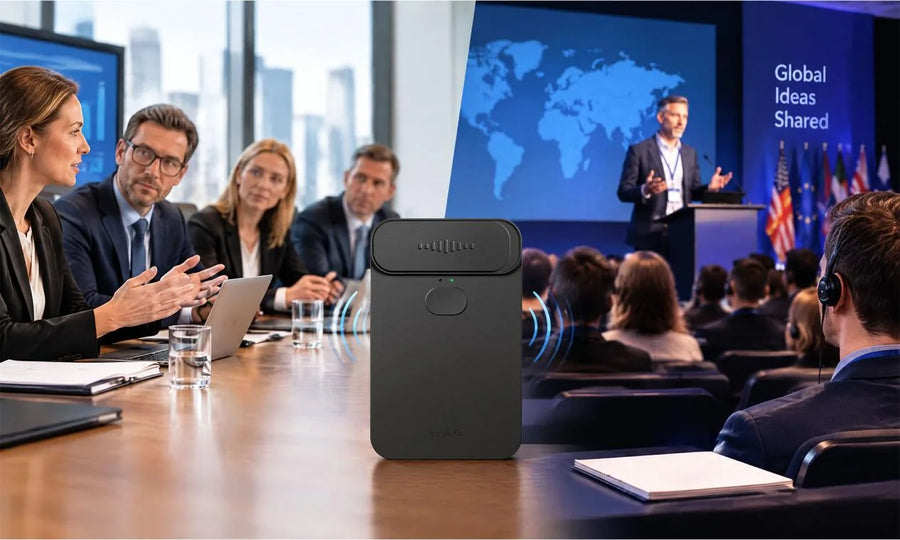
In a formal negotiation or a business meeting, professionalism is key. Using a smartphone can appear as if you are checking emails or being distracted by notifications. A high-quality hardware unit signals to your partners that you are serious about the communication. Furthermore, the directional microphones in specialized hardware are better at capturing distinct voices around a conference table than a standard smartphone.
Loud and Crowded Tourist Areas
Traditional tourist spots are often noisy. If you are trying to ask for directions at a train station, a smartphone microphone may struggle to distinguish your voice from the background hum. Specialized hardware utilizes "voice-tracking" algorithms that focus on the person speaking directly into the device. This makes it a reliable best real time translator for those navigating loud urban centers or public transportation hubs.
Emergency and Medical Situations
In a medical emergency, you need immediate and accurate results. Apps can fail if the phone is overheating, the signal is weak, or the app requires a sudden update. A dedicated hardware unit is built for reliability. Having a "single-purpose" tool ensures that when you need to communicate symptoms to a doctor or understand emergency instructions from local authorities, the technology will function as expected without software crashes.

Do Translator Devices Work Better Without Internet?
One of the primary concerns for international travelers is data connectivity. While many assume that all translation requires the internet, modern technology has enabled sophisticated offline capabilities that vary between apps and hardware.
Offline Translation Engine Quality
Most translation apps offer offline language packs, but these are often "lite" versions of the full engine, resulting in lower accuracy and simplified vocabulary. Dedicated hardware units frequently have larger internal storage and more powerful processors, allowing them to host more complex neural machine translation (NMT) models locally. This results in significantly better grammar and nuance when no signal is available.
Global Connectivity Features
Many high-end hardware units come with built-in "global data" SIM cards that work in over 100 countries without requiring you to purchase a local SIM or pay for expensive roaming. This feature bypasses the need for Wi-Fi entirely. While an app is tethered to your phone's data plan, a translator device with its own connectivity ensures you are never stranded in a location where your smartphone has no service.
Frequency of Updates and Lexicon Expansion
Online translation is generally superior because it accesses the latest linguistic databases. However, dedicated hardware units often handle "hybrid" translation better. They can stay connected to a low-bandwidth signal to pull small updates while using local power for the bulk of the work. This makes a portable translator more resilient in rural areas where 4G or 5G signals are intermittent or unstable.

Compare Cost, Free Features, and Subscriptions
Financial considerations are a major factor in the translator device vs. translation app debate. While apps often appear cheaper initially, the hidden costs of data and subscriptions can accumulate over time.
Upfront Hardware Investment
The primary disadvantage of a dedicated hardware unit is the initial price. A quality device can cost anywhere from $150 to $500. This is a significant investment compared to a "free" app. However, for frequent travelers, this is a one-time cost that provides a professional-grade tool designed to last for several years.
Hidden Costs of Free Apps
Many "free" translation apps have significant limitations. They may restrict the number of translations per day, include intrusive advertisements, or lock the most accurate engines behind a monthly subscription. Furthermore, the cost of international data roaming to run these apps can quickly exceed the price of a dedicated hardware unit after just one or two trips abroad.
Value for Frequent vs. Casual Users
For someone going on a single weekend trip to a country where they know some basic phrases, an app is likely the most logical choice. However, for expatriates, international students, or business travelers who frequently cross borders, the reliability and included data of a dedicated translator device offer much better long-term value. When you calculate the cost of subscription fees and potential data overages, the hardware often pays for itself within 12 to 18 months.
Choose the Right Option for Your Needs
To determine the best solution, you must assess your personal travel habits, your technical comfort level, and the importance of communication accuracy in your daily life.
For the Casual Holiday Traveler
If your primary need is to read a menu once a day or say "thank you" to a hotel clerk, a smartphone app like Google Translate or DeepL is likely sufficient. These apps are excellent for visual translation (using the camera) and handle basic phrases well enough for casual tourism. You do not need to carry an extra device if your communication needs are minimal.
For the International Professional
If your career involves frequent interaction with non-English speakers, investing in hardware is highly recommended. The question of whether a translator device better than an app is answered by the need for accuracy and the avoidance of social friction. The superior microphone quality and lack of distractions make it an essential tool for professional relationship building and clear information exchange.
For the Security-Conscious Individual
If you are traveling to regions where phone theft is a concern, you should avoid pulling out your expensive smartphone in public areas. A dedicated portable translator is less of a target for thieves and allows you to keep your phone safely tucked away. It also keeps your digital life private, as you aren't required to share a screen that might display personal messages or notifications.
Conclusion
Ultimately, the choice between a smartphone app and a dedicated translator device depends on your environment and frequency of use. While apps offer a convenient, low-cost solution for occasional needs, dedicated hardware provides superior audio performance, longer battery life, and more reliable offline capabilities. If you value seamless, real-time interaction and want to avoid the distractions and battery drain of a smartphone, a specialized hardware unit is the superior investment for breaking through language barriers.
FAQ about App & Translator Device
Can a translator device work without any Wi-Fi or cellular signal?
Yes, most high-quality dedicated hardware units come with pre-installed offline translation engines for major languages. While the accuracy is slightly lower than when connected to the internet, these devices can handle common conversations and emergency requests entirely without a signal.
Is a translator device more accurate than Google Translate?
In many cases, yes, but not necessarily because of the software. While many devices use engines similar to Google or Microsoft, their superior microphone arrays and noise-cancellation hardware allow the software to "hear" more accurately, which leads to fewer translation errors in real-world settings.
Can I use a translator device for learning a new language?
Yes, they can be very helpful for language learners. Most devices store a history of your translations, allowing you to review common phrases later. Many also feature "pronunciation correction" modes that help you practice speaking by comparing your input to the device's native-speaker audio output.