
Globalization allows companies to reach customers and partners worldwide, but it also creates a significant business language barrier. Misunderstandings in international trade can lead to lost revenue, legal disputes, and strained professional relationships. To remain competitive, organizations are increasingly turning to technology and specialized strategies. This guide explores how to overcome linguistic challenges using AI translation for meetings, cultural intelligence, and practical communication adjustments to ensure your global operations run smoothly and effectively.

What Is a Language Barrier in Business Communication?
A business language barrier occurs when people involved in a commercial transaction or collaborative project do not share a common primary language or have varying levels of proficiency in a shared language. This challenge is not limited to simple translation issues but encompasses several layers of linguistic complexity that can hinder professional progress.
Linguistic Differences and Vocabulary
The most obvious barrier is a lack of shared vocabulary. In specific industries like finance, engineering, or law, technical terms may not have direct equivalents in other languages. When professionals use industry-specific jargon, the risk of misinterpretation increases. Even if both parties speak a common language like English, differences in regional dialects and local idioms can create confusion during critical discussions.
Phonetic Challenges and Accents
Accents and pronunciation play a major role in how information is received. A speaker might have perfect grammar but an accent that is difficult for a non-native listener to decode. In fast-paced environments, this often leads to participants nodding in agreement without fully comprehending the speaker's intent, which can be disastrous for project implementation.
Nuance and Tone
Effective business communication relies heavily on tone and subtle nuances. A phrase that sounds polite in one language might come across as overly aggressive or dismissive when translated literally into another. These "invisible" barriers are often the hardest to manage because participants may not realize a misunderstanding has occurred until after a contract is signed or a task is incorrectly completed.
How Language Barriers Affect Meetings, Sales, Negotiations, and Team Collaboration
Linguistic gaps do not just slow down conversations; they have measurable impacts on a company's bottom line and internal morale. Recognizing these effects is essential for justifying investments in real-time business translation solutions.
Decreased Efficiency in Meetings
When a business language barrier is present, meetings take significantly longer. Information often needs to be repeated or rephrased multiple times to ensure clarity. This reduces the time available for actual decision-making and creative brainstorming. In many cases, participants who are less confident in their language skills may hesitate to contribute valuable ideas, leading to a loss of collective intelligence.
Strained Sales and Client Relations
In sales, building trust is paramount. If a potential client feels that the salesperson does not understand their needs or cannot explain product benefits clearly, they are unlikely to commit. Language gaps can make a company appear less professional or less invested in the local market. Conversely, companies that bridge these gaps effectively often see higher conversion rates in foreign territories.
Risks in Complex Negotiations
Negotiations require precise language to define boundaries, responsibilities, and financial terms. A single mistranslated word in a negotiation session can lead to a fundamental disagreement over contract obligations. These errors often result in expensive legal mediation or the total collapse of a deal that took months to build.
Fragmented Team Collaboration
For multinational companies, internal collaboration is often hampered by language differences between regional offices. This can lead to a "silo" effect where departments stop communicating because it is too difficult. When team members cannot share feedback or report issues effectively, project timelines slip, and employee frustration rises, potentially leading to higher turnover rates.

How to Prepare for an International Meeting Before It Starts
Preparation is the most effective way to mitigate the risks of a language gap. Taking a proactive approach allows all participants to feel more confident and focused on the meeting's objectives.
Utilize AI for Documentation
Modern AI meeting prep involves more than just reading an agenda. You can use AI tools to translate briefing documents, presentation slides, and technical specifications well in advance. Providing these materials in the native language of your partners allows them to process complex data at their own pace, ensuring they arrive at the meeting ready to engage in high-level discussion rather than struggling with basic translation.
Distribute Multilingual Agendas
A clear, structured agenda is vital. When preparing for a meeting with a known language gap, list the specific goals and discussion points in both languages. This serves as a "roadmap" during the session. If someone loses their place in the conversation, they can refer back to the agenda to understand the current context.
Establish a Shared Glossary
For technical projects, create a shared document defining key terms in all relevant languages. This ensures that when someone mentions a specific process or component, everyone is visualizing the same thing. This form of AI meeting prep reduces the need for mid-meeting clarifications and helps maintain a professional, organized atmosphere.

Use Real-Time AI Translation During Multilingual Meetings
While preparation is key, the actual interaction requires live support. The emergence of AI translation for meetings has transformed how international teams communicate by providing instant linguistic bridges.
Instant Speech-to-Text and Translation
Using real-time business translation solutions allows participants to see a live transcript of the conversation on their screens. This is particularly helpful for those who understand written language better than spoken words. By following the text in real-time, attendees can keep up with the pace of the discussion even if the speaker has a strong accent or speaks quickly.
Reducing Cognitive Load
Translating in one's head is exhausting. When participants have to spend all their mental energy decoding language, they have less capacity for critical thinking. Automated translation handles the heavy lifting, allowing executives and engineers to focus on the "what" instead of the "how." This leads to higher-quality contributions and better overall meeting outcomes.
Post-Meeting Records and Summaries
The benefit of AI translation for meetings extends beyond the live session. These tools often provide an accurate, translated transcript and an AI-generated summary of action items. This ensures that everyone leaves with the same understanding of what was decided, regardless of their native language. It creates an objective "source of truth" that prevents "he-said, she-said" disputes later on.

Improve Cross-Cultural Communication Beyond Word-for-Word Translation
Language is only one part of the puzzle. To truly overcome a business language barrier, one must also understand the cultural context in which the language is used.
High-Context vs. Low-Context Cultures
Communication styles vary globally. In "low-context" cultures (like the US or Germany), communication is direct and explicit. In "high-context" cultures (like Japan or the UAE), much of the meaning is conveyed through non-verbal cues and the relationship between the parties. Cross-cultural business communication tools can help managers understand these differences, preventing them from appearing rude or missing subtle signals of disagreement.
Non-Verbal Communication and Etiquette
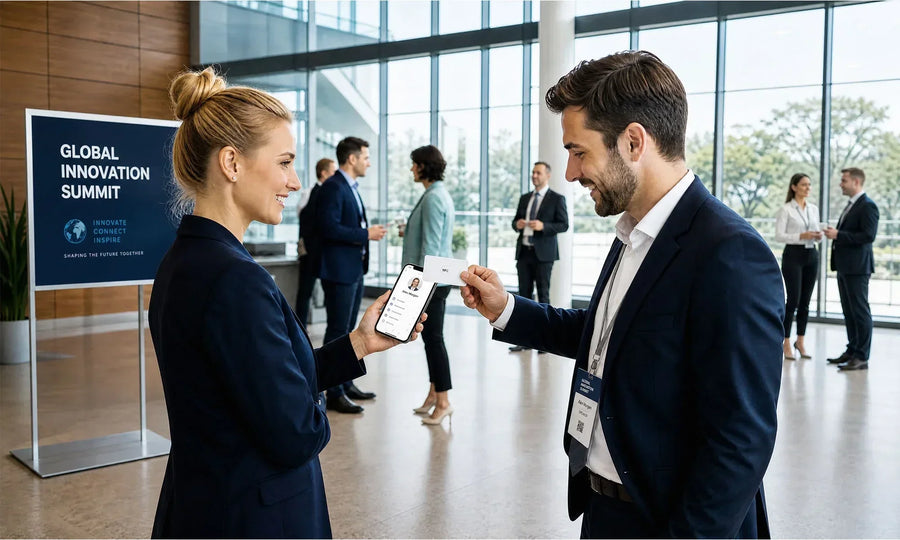
Body language, eye contact, and personal space vary significantly across cultures. For example, a "thumbs up" or a certain head nod can mean entirely different things in different regions. Being aware of these physical cues is just as important as knowing the right words. Respecting local etiquette—such as the proper way to exchange business cards or start a meeting—builds the rapport necessary to overcome linguistic hurdles.
Adapting Communication Speed and Style
When speaking with non-native speakers, it is important to speak clearly and at a moderate pace. This does not mean "talking down" to someone, but rather being mindful of their processing time. Pause frequently to allow for translation and check for understanding before moving to the next topic. This patient approach is a hallmark of successful international business leaders.
Simplify Technical Jargon for Non-Native Speakers
Technical expertise can sometimes become a barrier in itself. When working across borders, the ability to simplify complex ideas into "plain language" is a vital skill.
Avoiding Idioms and Slang
Idioms like "ballpark figure," "get the ball rolling," or "touch base" rarely translate well. They often confuse non-native speakers who may take the words literally. Stick to standard, professional English (or whichever language is being used) to ensure that the core message is not lost in a sea of cultural metaphors.
Using Visual Aids and Diagrams
A diagram or a flow chart is a universal language. Whenever possible, supplement your verbal explanations with visual data. If you are discussing a manufacturing process or a software architecture, a well-designed visual aid can communicate more in ten seconds than a five-minute speech. This is a simple but powerful way to bypass a business language barrier.
Confirming Understanding Through Feedback
Do not simply ask, "Do you understand?" Many people will say "yes" to avoid embarrassment. Instead, ask open-ended questions like, "How do you see this process working in your local facility?" or "What are your thoughts on the timeline we just discussed?" This requires the other party to demonstrate their understanding and highlights any areas that may need further clarification.
How to Choose the Right AI Translation Tool for Business
With so many options available, selecting the right technology is critical for corporate success. You need a tool that is reliable, secure, and integrated into your workflow.
Integration with Existing Workflows
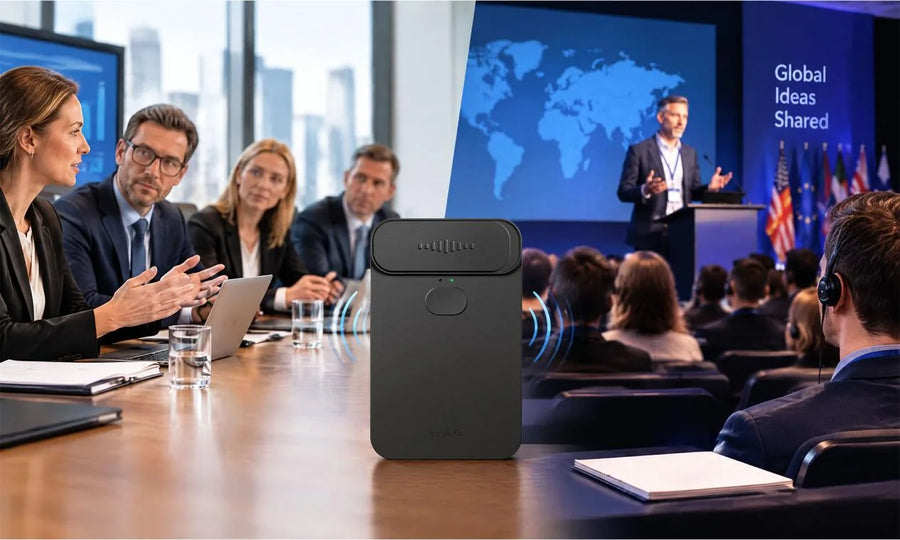
A good tool should work where you work. Whether you are using Zoom, Teams, or meeting in person, your translation solution should be easily accessible. The InnAIO TransNote AI Translation Recorder is an excellent example of a versatile hardware solution. It features a 5-microphone system for a 5-meter pickup range and offers real-time translation, AI summaries, and even mind maps. This makes it one of the most effective cross-cultural business communication tools for professionals who need to move between office meetings and digital calls seamlessly.
Accuracy and Security
In business, 90% accuracy is often not enough. Look for tools that use advanced Large Language Models (LLMs) and offer industry-specific vocabulary support. Furthermore, ensure the tool complies with data privacy regulations like GDPR. Since business meetings often involve confidential data, the security of your AI translation for meetings provider is as important as the translation quality itself.
Versatility and Additional Features
The best real-time business translation solutions do more than just swap words. Look for features like speaker identification (knowing who said what), recording capabilities for legal compliance, and the ability to handle multiple languages in a single session. Tools that provide a comprehensive "ecosystem"—from AI meeting prep to post-call analysis—offer the best return on investment.
Best Practices for Using AI Translation in International Negotiations
Negotiations are high-stakes environments where every word counts. Using AI in these settings requires a specific set of professional protocols.
Disclose the Use of AI Tools
Transparency builds trust. At the beginning of a negotiation, inform all parties that you are using real-time business translation solutions to ensure everyone has a clear understanding of the discussion. Most partners will appreciate the effort to maintain clarity and accuracy.
Verify Critical Figures and Dates
AI is powerful, but it can occasionally misinterpret numbers or dates if the audio quality is poor. Always verbally confirm financial terms, deadlines, and quantities. You can even use the screen-sharing feature to show the written figures to all participants while the AI translation for meetings tool is running to provide double verification.
Combine Technology with Human Oversight
For final contract reviews or extremely sensitive legal points, technology should supplement, not replace, human expertise. Use cross-cultural business communication tools to handle the bulk of the discussion, but involve a professional translator or local legal counsel for the final validation of a formal agreement. This "hybrid" approach offers the speed of AI with the safety of human judgment.

Conclusion
Successfully managing a business language barrier is no longer a luxury but a necessity for global growth. By combining thorough AI meeting prep with advanced real-time business translation solutions, companies can foster clear communication and build lasting international partnerships. While technology like the InnAIO TransNote provides the tools for success, the human elements of patience, cultural respect, and clarity remain the foundation of all great global business achievements.
FAQ about Overcoming Language Barriers in Business
How do AI translation tools handle different accents?
Modern AI tools are trained on massive datasets that include thousands of regional accents and dialects. While extremely thick accents can still pose a challenge, current AI translation for meetings technology is highly resilient. To improve results, participants should use high-quality microphones and avoid speaking over one another, as clear audio input significantly boosts the AI's ability to decode accented speech.
What is the best way to prepare for a meeting with a language barrier?
The best preparation involves a two-step process. First, use AI meeting prep to translate and distribute the agenda and key documents at least 24 hours in advance. Second, familiarize yourself with the cultural etiquette of your counterparts. This dual approach ensures that you are prepared for both the technical content of the meeting and the social dynamics required to build trust across borders.
Is real-time AI translation accurate enough for legal contracts?
No, while real-time business translation solutions are excellent for discussions and general understanding, they should not be the final word on legal contracts. Legal language is highly specialized and often carries specific historical or regional weight. Always have a qualified human legal professional review any final documents to ensure that the AI-translated intent matches the legal reality of the jurisdiction.
Can AI translation support multilingual group meetings?
Yes, most advanced AI translation for meetings platforms can now handle multiple languages simultaneously. For example, a speaker in English can be translated into Spanish for one participant and Mandarin for another. Some tools even include "speaker labeling" features, which identify each participant by name in the transcript, making it easy to follow complex, multi-party conversations in a diverse group setting.