Networking has transformed into a high-tech exchange of data that happens in seconds. In 2026, the traditional stack of paper cards is being replaced by more efficient, sustainable, and interactive alternatives. Understanding what is a digital business card is the first step toward modernizing your professional image. This guide explores the technology, benefits, and safety of digital networking tools to help you decide if it is time to retire your paper cards forever.
How Does a Digital Business Card Work?
A digital business card is a dynamic profile that hosts your contact information, social media links, and professional documents in a cloud-based environment. Unlike a static piece of paper, this digital version is interactive and can be updated instantly. The underlying system relies on web hosting and various wireless or visual sharing methods to ensure your data reaches the recipient's phone without manual entry.
Cloud-Based Data Hosting
At its core, a digital business card is a personalized landing page. When you sign up for a service, you create an account where you upload your name, phone number, and company details. This information is stored on a secure server. When you "share" your card, you are essentially sending a unique URL that points to this hosted profile, allowing the recipient to view and save your details immediately.
Wireless Sharing via Near Field Communication
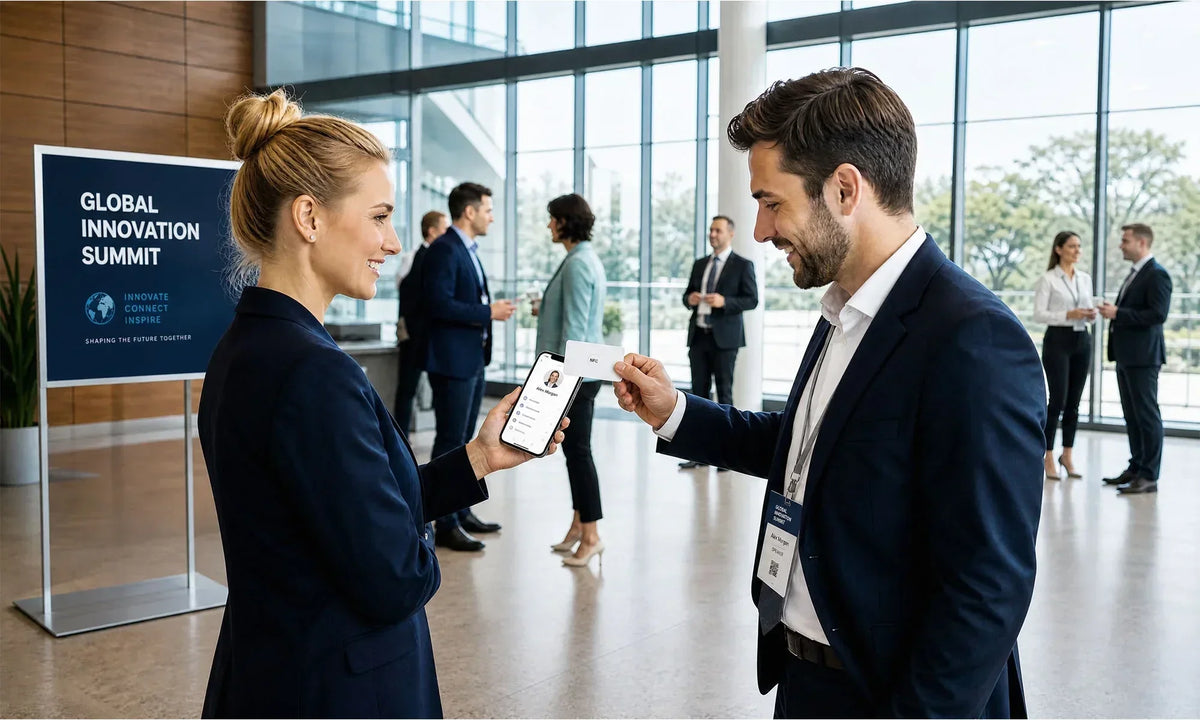
One of the most popular ways to distribute your information is through hardware. If you are wondering how does an NFC digital business card work, it uses the same technology as contactless payments like Apple Pay or Google Wallet. A small chip inside a physical card or tag emits a short-range radio signal. When you tap the card against a smartphone, the phone's NFC reader detects the signal and automatically opens your digital profile in the phone's browser.
Visual Scanning with QR Codes
For devices that do not support NFC or for situations where physical contact is impossible, QR codes serve as a reliable fallback. Each digital profile generates a unique QR code. When a recipient scans this code with their camera, they are redirected to your digital profile. This method is highly effective for virtual meetings, email signatures, or even printed on the back of a physical card as a secondary sharing option.
Direct Messaging and Link Sharing
Because the card is essentially a website, you can share it through any digital channel. This includes sending the link via WhatsApp, LinkedIn, or text message. In a professional context, many users embed their digital card link into their email signature or Zoom background, ensuring their contact details are accessible even during remote or hybrid work scenarios.

What Information Should You Include?
The primary advantage of a digital profile is the lack of physical space constraints. While a paper card limits you to a logo and a phone number, a digital version allows for a comprehensive overview of your professional identity. However, including too much data can overwhelm the recipient, so a strategic approach is necessary.
Essential Contact Details
Always start with the basics: your full name, professional title, company name, and a high-resolution headshot. Including a photo is highly recommended for a digital business card because it helps people remember your face long after the meeting has ended. You should also provide multiple ways to reach you, such as a direct office line, a mobile number, and a professional email address.
Social Media and Portfolio Links
Modern networking involves multiple platforms. Include buttons that link directly to your LinkedIn profile, Twitter (X), or Instagram if they are relevant to your work. If you are in a creative or technical field, providing a direct link to your GitHub, Behance, or personal portfolio website allows potential clients to see your work history and skills in real-time without needing to search for you manually.
Interactive Calls to Action
A digital card should be more than just a list of facts; it should be a tool for engagement. You can include "Save Contact" buttons that automatically format your data into the recipient’s address book. Furthermore, integrating scheduling links like Calendly or HubSpot Meetings allows the recipient to book a consultation or a follow-up call directly from your business card profile, significantly increasing conversion rates.
Multimedia and Dynamic Content
In 2026, many professionals use their cards to share rich media. This can include a short video introduction, a downloadable PDF of a product catalog, or a link to a recent podcast episode. By including these dynamic elements, you transform a simple contact exchange into a mini-marketing presentation that provides immediate value to your new connection.

Compare NFC, QR Codes, and Shareable Links
Choosing the right sharing method depends on the environment and the type of interaction you have with a client. Most professionals utilize a combination of all three to ensure they never miss an opportunity to connect. Understanding the nuances of NFC business card vs. QR code functionality is essential for a smooth experience.
The Tap-to-Share Experience of NFC
NFC is often seen as the most "premium" way to network. It creates a seamless, frictionless interaction that impresses clients. The main benefit of an NFC card is speed; there is no need to open an app or use a camera. However, the limitation is proximity. You must be physically close to the other person's phone for the signal to work.
The Universal Accessibility of QR Codes
When comparing an NFC business card vs. QR code, the QR code wins on versatility. It works on every smartphone with a camera and can be shared across distances. You can show a QR code on your phone screen, print it on a brochure, or include it in a PowerPoint presentation. This makes it the better choice for large-group settings or digital-only interactions where physical tapping is not an option.
When to Use Shareable Links
Shareable links are the best tool for "passive" networking. These are ideal for social media bios and messaging platforms. If you are following up with a lead via LinkedIn, sending your digital card link is more professional than simply typing out your phone number. It allows the lead to explore your professional links and save your data at their own convenience.
Is a Digital Business Card Better Than a Paper Card?
While paper cards carry a sense of tradition, they are increasingly seen as inefficient in a digital-first economy. Evaluating the two options requires looking at long-term costs, environmental impact, and the practicalities of data management.
Cost-Effectiveness and Updates
Paper cards are expensive to design, print, and ship. Every time you change your phone number or job title, you must throw away your existing stack and order new ones. A digital business card allows for unlimited updates at no extra cost. You change the data in the app once, and every person who has your link or card will immediately see the updated information.
Sustainability and Environmental Impact
In an era where corporate social responsibility is vital, reducing paper waste is a significant benefit. Most paper business cards end up in the rubbish within a week of being received. Moving to a digital system eliminates the need for mass printing and reduces your carbon footprint, which can be an excellent talking point when meeting environmentally conscious clients.
Data Analytics and Lead Tracking
Perhaps the most significant advantage of digital over paper is data. Many digital card platforms provide analytics, showing you how many times your card was viewed, which links were clicked, and where the interaction took place. This level of insight is impossible with paper and allows sales teams to measure the effectiveness of their networking efforts accurately.
Use Digital Business Cards at Trade Shows and Meetings
High-traffic environments like industry conferences require a fast and organized way to capture leads. Using a digital business card for trade shows ensures that you don't lose potential clients in the chaos of a busy event.
Streamlining Lead Capture
At a trade show, you might meet hundreds of people in a single afternoon. Manually entering contact info from paper cards is time-consuming and prone to errors. When you use a digital system, you can often "exchange" info, where the recipient taps your card and is prompted to leave their details in return. This creates a digital log of every person you met, making follow-up much easier.
International Networking Without Physical Barriers
If you are engaging in a digital business card for international networking strategy, physical cards can be a burden. Carrying boxes of cards through customs is inconvenient, and you may run out before the trip is over. A digital card is always with you on your phone or in your wallet as a single NFC card, ensuring you can connect with people in any country without worrying about physical supply.
CRM Integration for Sales Teams
For larger organizations, digital cards can be synced directly with CRM software like Salesforce or Pipedrive. When a salesperson taps their card to a lead's phone, the contact data is automatically uploaded to the company's database. This eliminates the "dead time" between meeting a lead and entering them into the sales funnel, giving your team a significant competitive advantage.

Are Digital Business Cards Safe?
Security is a common concern when moving sensitive professional data to the cloud. However, digital cards offer more control over your privacy than paper cards, which can be easily lost or stolen with all your data printed in plain sight.
Control Over What You Share
With a digital card, you decide exactly which buttons and links are visible. If you are in a public setting and don't want to share your personal mobile number, you can toggle that field off in your app settings instantly. You can also "lock" your card with a PIN or password if you are sharing highly sensitive internal documents through the profile.
Data Encryption and Privacy Standards
Reputable providers of the digital business card use high-level encryption (SSL/TLS) to protect the data transmitted between the card and the phone. Furthermore, these companies must comply with international data privacy laws like GDPR. This ensures that your contact list and your own data are not sold to third parties or exposed to hackers.
Protecting Against Unwanted Taps
A common question regarding how does an NFC digital business card work is whether someone can "steal" your info by walking past you. NFC signals have an extremely short range (usually less than 4cm). It is physically impossible for someone to scan your card while it is inside your wallet or pocket without you noticing. This makes NFC a very secure method for intentional data exchange.
Conclusion
A digital business card is no longer just a novelty; it is a vital tool for the modern professional. By combining the tactile feel of an NFC card with the limitless potential of cloud-based data, you can network more effectively, sustainably, and securely. Whether you are using a digital business card for trade shows or simple one-on-one meetings, the ability to share interactive content and track engagement provides a level of utility that paper simply cannot match. Transitioning to digital is an investment in your professional future and a commitment to modern efficiency.
FAQ about Digital Business Card
Do I need an app to use a digital business card?
No, the recipient does not need an app to view your information. Most digital cards open directly in the smartphone's web browser. As the owner, you may use an app to manage and update your profile, but the sharing process is designed to be frictionless for the other person.
Do digital cards work on both iPhone and Android?
Yes, they do. Modern iPhones and Android devices are equipped with NFC readers and high-quality cameras for QR scanning. While the physical placement of the NFC reader varies between brands, the core technology is compatible across all major smartphone platforms.
Can I have multiple versions of my digital business card?
Yes, many platforms allow you to create different profiles for different needs. For example, you could have a professional card for corporate meetings and a more casual version for social events or side projects. You can switch between these profiles in your app instantly.
Is there a monthly fee for digital business cards?
It depends on the provider. Many companies offer a "free-for-life" basic profile with essential contact info. Premium features, such as advanced analytics, custom branding, and CRM integration, usually require a monthly or annual subscription fee.
How long does an NFC business card last?
A physical NFC card is designed for durability and typically lasts for years. The chip inside does not have a battery and is powered by the electromagnetic field of the phone that scans it. Unless the card is physically snapped or exposed to extreme heat, it will continue to work indefinitely.